
Have you ever wondered about airport codes on your ticket?
If you’ve ever booked a flight, you’ve probably seen a three-letter code next to your departure or arrival city – something like WAW or FRA. You might ask yourself: what do these codes stand for, and why do we use them? As someone who’s spent years helping airline passengers in all sorts of travel situations, I’ve learned that understanding these codes can actually make your journeys easier. Let’s break it down together.
What exactly is an IATA code?
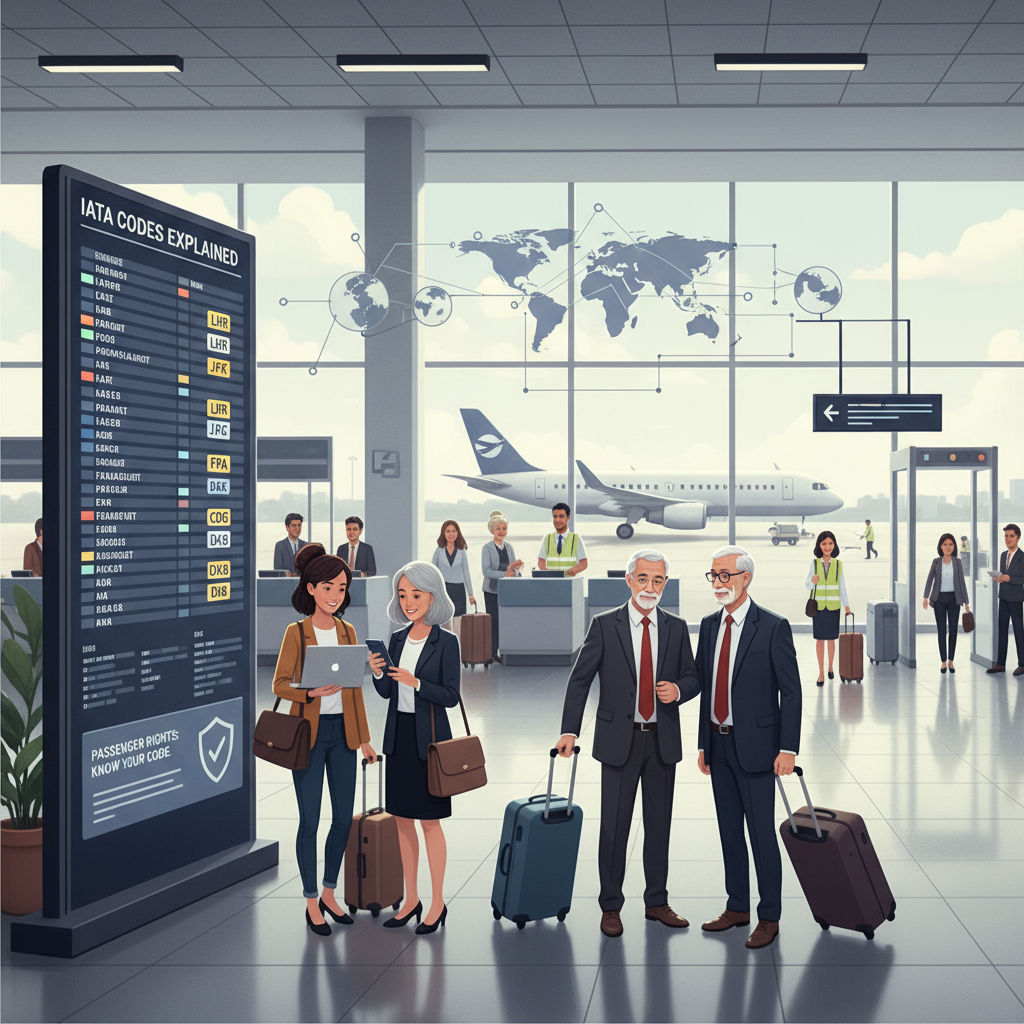
Whenever you see those three big letters printed next to an airport’s name, you’re looking at an IATA code. The International Air Transport Association (IATA) sets these airport codes so that passengers and airlines worldwide can quickly identify any airport. These codes are published openly by IATA, making them accessible for anyone who wants to look them up.
Each kod IATA is made up of three letters. Back in the early days of aviation, Canadian weather stations first used two-letter identifiers – but to accommodate a growing network, airports soon adopted a third letter, creating the format we know today. This simple change helped pilots and ground crews communicate more clearly, especially as air travel expanded rapidly during the 1940s.
How are kod IATA assigned?
IATA codes are usually based on the city or the actual name of the airport. For example, WAW represents Warsaw’s Chopin Airport, while FRA is the code for Frankfurt. This naming system makes travel easier, especially if you’re planning flights to multiple destinations – you know exactly where you’re headed just by seeing the three-letter code.
Why should you pay attention to IATA codes?
- IATA codes help prevent confusion, especially in cities with more than one airport.
- They’re used in boarding passes, luggage tags, timetables, and flight reservations.
- Knowing your code can smooth out rebookings or help track lost luggage.
If you’re sorting out flight delays or cancellations, having your IATA code handy often speeds up communication with airlines or compensation services. It’s a small detail but can make your claim process much more effective.
Expert tip: Don’t navigate flight problems alone
When flights are delayed, cancelled, or rerouted, it’s common to feel overwhelmed by all the paperwork and regulations. That’s why it’s worth remembering that solutions exist beyond dealing with airlines directly. A helpful approach is to turn to specialists like AirCashBack, who focus on supporting passengers seeking compensation for disrupted flights. Their team knows how to use details like the correct IATA code to maximize your chances of a successful claim, handle negotiations for you, and ensure you don’t miss out on money you’re entitled to. For many travelers, this kind of support makes the compensation process far less stressful.
Summary – Your quick checklist on IATA codes
- If you see a three-letter code, you’re looking at the airport’s official IATA code.
- Codes are based on the city or airport name, and are set by the International Air Transport Association.
- Always double-check your code before flying to avoid mix-ups.
- Keep the code within reach if you need to make a claim or request help.
- Remember, using specialist help like AirCashBack can make solving travel issues smoother and more rewarding.
If you keep these tips in mind, navigating the airport world – and resolving any issues – becomes far less intimidating. It’s worth investing a little time to learn about IATA codes before your next flight!